

Protect Your Cat Against Feline Leukemia with Preventive Veterinary Care
Keeping your cat healthy involves more than providing nutritious food, a comfortable home, and regular exercise. Preventive veterinary care, including appropriate vaccinations, plays an important role in protecting cats from potentially serious infectious diseases.
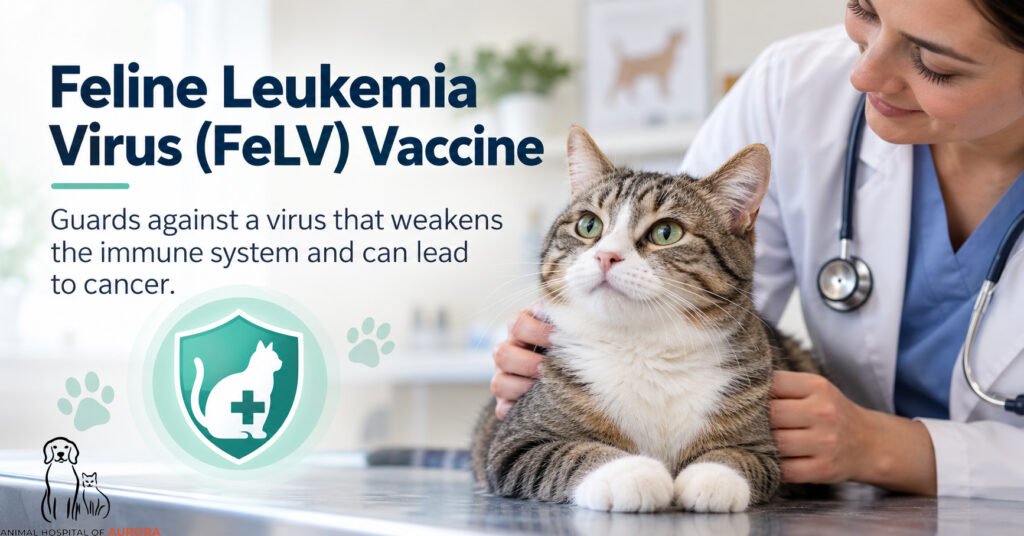
One disease that cat owners should understand is Feline Leukemia Virus (FeLV), a contagious viral infection that weakens the immune system and can contribute to serious health complications, including certain types of cancer.
At Animal Hospital of Aurora, we believe that prevention is an essential part of lifelong feline health. Our veterinary team helps cat owners in Aurora, Ontario, make informed decisions about vaccinations based on their cat’s age, lifestyle, and individual risk factors.
What Is Feline Leukemia Virus (FeLV)?
Feline Leukemia Virus (FeLV) is an infectious virus that affects cats and can interfere with their immune system, making it more difficult to fight infections.
Some cats infected with FeLV may appear healthy for an extended period, while others develop serious medical problems.
Potential health complications include:
- Weakened immune system: Increased vulnerability to infections.
- Anaemia: Reduced red blood cell production, which can cause weakness and fatigue.
- Lymphoma and other cancers: FeLV infection can increase the risk of certain cancers.
- Recurring illnesses: Infected cats may experience persistent or repeated health problems.
- Weight loss and reduced appetite: Some affected cats experience gradual changes in their overall condition.
Although supportive veterinary care can improve comfort and quality of life, there is currently no treatment that reliably eliminates FeLV infection from an infected cat.
This makes prevention and early detection especially important.
How Does Feline Leukemia Virus Spread?
FeLV primarily spreads through close contact between infected and uninfected cats.
Common transmission routes include:
- Mutual grooming and prolonged close contact
- Sharing food and water bowls
- Bite wounds from infected cats
- Transmission from an infected mother to her kittens
Cats that spend time outdoors or regularly interact with cats of unknown FeLV status may have a higher risk of exposure.
FeLV is specific to cats and does not infect humans or dogs.
What Is the FeLV Vaccine for Cats?
The Feline Leukemia Virus (FeLV) vaccine is a preventive vaccination designed to reduce the risk of FeLV infection.
It helps the immune system develop protection against the virus before exposure occurs.
Benefits of FeLV Vaccination
1. Protection Against a Serious Viral Infection
Vaccination helps reduce the likelihood of infection with a virus that can cause significant long-term health complications.
2. Support for Long-Term Feline Health
Preventing FeLV infection can reduce the risk of illnesses associated with immune system suppression.
3. Important Protection for Kittens
Young cats are particularly susceptible to progressive FeLV infection. Vaccination is recommended for kittens as part of an appropriate preventive healthcare programme.
4. Protection for Cats at Higher Risk
Cats with outdoor access or regular contact with other cats may benefit significantly from FeLV vaccination.
5. Greater Peace of Mind for Cat Owners
Following an appropriate vaccination schedule is one of several preventive steps owners can take to help protect their cats.
While vaccination provides important protection, no vaccine is 100% effective.
Which Cats Should Receive the FeLV Vaccine?
The decision to vaccinate depends on your cat’s age, medical history, and potential exposure to the virus.
Kittens
FeLV vaccination is generally recommended for all kittens because their future lifestyle and exposure risks may change as they grow.
Outdoor Cats
Cats that explore outdoors may encounter unfamiliar cats and face a greater risk of FeLV exposure.
Cats Living in Multi-Cat Households
Vaccination may be recommended when cats share a home with other cats whose FeLV status is unknown or when there is a possibility of exposure to infected cats.
Newly Adopted Cats
Cats adopted from shelters, rescue organisations, or other households may benefit from FeLV testing and an individualised vaccination assessment.
Indoor Cats
Strictly indoor adult cats with no potential exposure to infected cats may have a lower risk. Your veterinarian can determine whether continued FeLV vaccination is appropriate.
At Animal Hospital of Aurora, vaccination recommendations are tailored to each cat rather than relying on a one-size-fits-all approach.
FeLV Vaccination Schedule for Kittens and Adult Cats
An appropriate vaccination schedule helps establish and maintain protection.
| Cat’s Age or Situation | Typical FeLV Vaccination Recommendation |
|---|---|
| Kittens from 8 weeks old | First FeLV vaccine dose |
| 3–4 weeks after first dose | Second FeLV vaccine dose |
| 12 months after initial series | Booster vaccination |
| Adult cats with ongoing high exposure risk | Additional boosters, often annually |
| Lower-risk adult cats | Individual assessment; booster intervals depend on risk and vaccine product |
Before beginning FeLV vaccination, cats should be tested to establish their FeLV infection status.
Your veterinarian will recommend the most appropriate schedule based on your cat’s health, lifestyle, exposure risk, and the vaccine being used.
What Are the Symptoms of Feline Leukemia?
FeLV infection can cause a variety of symptoms, and some infected cats may not show obvious signs initially.
Potential warning signs include:
- Persistent loss of appetite
- Unexplained weight loss
- Low energy or unusual tiredness
- Pale gums
- Recurring infections
- Swollen lymph nodes
- Poor coat condition
- Persistent fever or digestive problems
These symptoms can also occur with other medical conditions. A veterinary examination and appropriate diagnostic testing are needed to determine the cause.
If your cat shows any concerning changes, contact your veterinarian promptly.
Is the FeLV Vaccine Safe for Cats?
FeLV vaccines are generally considered safe for appropriately selected cats.
Like other vaccinations, they may occasionally cause mild, temporary reactions such as:
- Slight tenderness at the injection site
- Temporary fatigue
- Mild reduction in appetite
- A short-lived low-grade fever
Serious allergic reactions are uncommon but require immediate veterinary attention.
Before vaccination, your veterinarian will review your cat’s health history and assess whether the vaccine is appropriate.
Can Indoor Cats Get Feline Leukemia?
Indoor cats generally have a lower risk of FeLV infection when they have no contact with infected cats.
However, exposure may become possible when:
- A new cat is introduced into the home.
- An indoor cat escapes outdoors.
- The household includes cats of unknown FeLV status.
- A cat’s lifestyle changes over time.
Even indoor cats can benefit from regular veterinary wellness examinations and discussions about appropriate vaccinations.
How Can You Protect Your Cat Against FeLV?
Vaccination is an important preventive measure, but responsible feline healthcare involves several complementary steps.
Schedule regular veterinary examinations. Routine wellness visits help identify health concerns and allow your veterinarian to review your cat’s vaccination needs.
Test cats for FeLV when appropriate. Testing is particularly important before initial vaccination and when introducing new cats into a household.
Limit exposure to unfamiliar cats. Keeping cats indoors or providing supervised outdoor access can reduce the risk of infection.
Maintain an individualised vaccination schedule. Your cat’s requirements may change with age, lifestyle, and health status.
Provide balanced nutrition and a healthy environment. Good nutrition and appropriate preventive care support overall feline well-being.
Why Choose Animal Hospital of Aurora for Cat Vaccinations?
At Animal Hospital of Aurora, we understand that every cat has unique healthcare needs.
Our veterinary team is committed to providing compassionate, personalised care to help cats stay healthy throughout their lives.
Our approach includes:
- Individualised vaccination recommendations
- Routine wellness examinations
- Preventive healthcare guidance
- Veterinary diagnostic services
- Support and education for cat owners
- A welcoming environment for pets and their families
Whether you have recently welcomed a kitten into your family or want to review an adult cat’s vaccination history, our team can help you understand the next steps.
Learn more about our veterinary services and preventive pet care.
Frequently Asked Questions About the FeLV Vaccine
1. Is the FeLV vaccine necessary for every cat?
FeLV vaccination is recommended for kittens and cats with an ongoing risk of exposure. Adult indoor cats with no exposure risk may not require continued vaccination. Your veterinarian can help determine the appropriate plan.
2. At what age can kittens receive the FeLV vaccine?
Kittens can typically receive their first FeLV vaccination at eight weeks of age, followed by a second dose three to four weeks later.
3. Does the FeLV vaccine cure feline leukemia?
No. The FeLV vaccine is preventive and does not treat or cure an existing FeLV infection.
4. Should my cat be tested before receiving the FeLV vaccine?
Yes. FeLV testing is recommended before beginning vaccination to establish whether your cat is already infected.
5. How often does my cat need an FeLV booster?
Booster frequency depends on the cat’s exposure risk and the vaccine product. Cats with regular exposure risk may require annual boosters, while other cats may need less frequent vaccination or none after an initial series.
6. Can vaccinated cats still get FeLV?
Yes. Vaccination significantly helps reduce risk but cannot guarantee complete protection. Minimising exposure and appropriate testing remain important.
7. Where can I discuss FeLV vaccination for my cat in Aurora, Ontario?
You can contact Animal Hospital of Aurora to arrange a veterinary consultation and discuss appropriate FeLV vaccination for your cat.
Book a Cat Vaccination Appointment in Aurora, Ontario
Protecting your cat starts with informed preventive care.
If you’re looking for cat vaccinations in Aurora, Ontario, the veterinary team at Animal Hospital of Aurora can help you assess your cat’s FeLV exposure risk and develop a suitable vaccination plan.
Schedule a veterinary visit and take an important step towards protecting your cat’s long-term health.