

Protect Your Pet’s Reproductive Health with Compassionate Veterinary Care
At Animal Hospital of Aurora, we believe preventive healthcare plays an essential role in helping your furry companions enjoy happy, healthy lives. One important preventive procedure for female dogs and cats is ovariohysterectomy, commonly known as spaying.
Spaying is a commonly performed veterinary surgical procedure that prevents unwanted pregnancies and helps protect pets against certain reproductive health conditions.
If you are considering dog or cat spaying in Aurora, Ontario, our veterinary team can help you understand the procedure, its benefits, potential risks and the best timing for your pet.
What Is Ovariohysterectomy (Spaying)?
Ovariohysterectomy is a surgical procedure involving the removal of a female pet’s ovaries and uterus. It is performed under general anaesthesia by a veterinarian.
Once the procedure is complete, your female dog or cat will no longer be able to reproduce or experience normal heat cycles.
According to the American College of Veterinary Surgeons (ACVS), ovariohysterectomy is an established surgical approach that can prevent certain reproductive diseases and unwanted pregnancies.
Spaying is commonly recommended for pets not intended for breeding. However, the decision should consider your pet’s age, breed, size, overall health and individual needs.
Benefits of Spaying Your Female Dog or Cat
Spaying can provide several important health and lifestyle benefits.
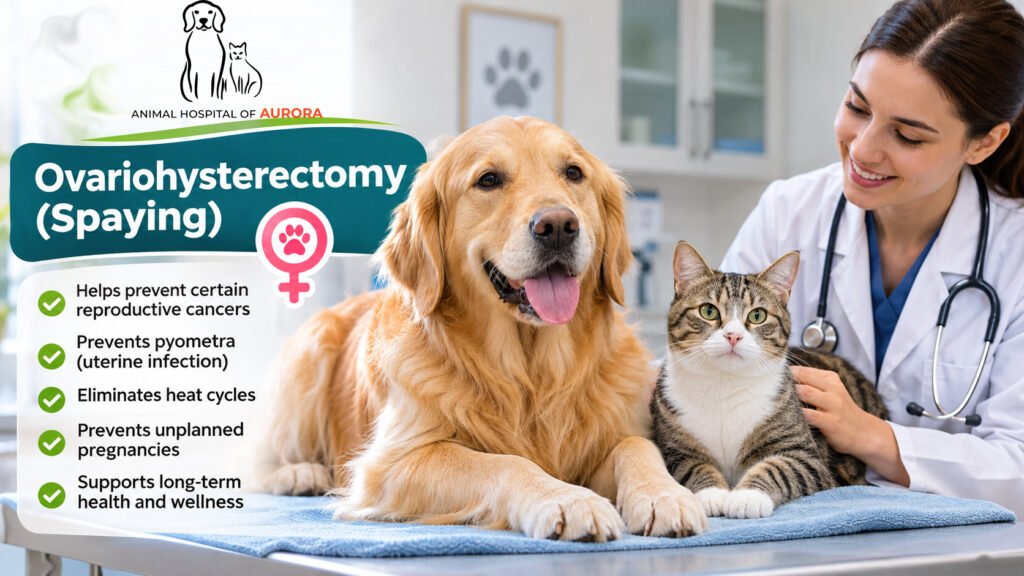
1. Helps Prevent Certain Reproductive Cancers
Spaying removes the ovaries and uterus, preventing cancers that originate in these organs. When performed at an appropriate age, it may also reduce the risk of mammary (breast) tumours, particularly in cats and some dogs.
The extent of this protection depends on factors such as species, age and reproductive history.
2. Prevents Pyometra (Uterine Infection)
Pyometra is a potentially life-threatening infection of the uterus that can affect unspayed female dogs and cats.
Ovariohysterectomy prevents pyometra by removing the uterus and ovaries.
3. Prevents Unplanned Pregnancies
Spaying permanently prevents pregnancy, helping reduce unwanted litters and supporting responsible pet ownership.
4. Eliminates Heat Cycles
Female dogs and cats experience hormonal changes during their reproductive cycles.
Spaying eliminates normal heat cycles and associated behaviours such as vocalization, restlessness and attracting male animals.
5. Supports Long-Term Preventive Healthcare
Spaying can be an important part of a comprehensive preventive healthcare plan.
The American Veterinary Medical Association (AVMA) emphasizes that decisions about spaying should balance the benefits and potential risks for each individual animal.
When Should You Spay Your Dog or Cat?
The ideal age for spaying depends on several factors.
For female cats: Spaying is often recommended by approximately five months of age for cats not intended for breeding.
For female dogs: The ideal timing varies depending on breed, size, developmental stage and overall health. Some dogs may benefit from waiting until they are more physically mature.
There is no single spaying age appropriate for every dog.
The AVMA’s Spaying and Neutering Guidance provides additional information about recommendations for dogs and cats.
At Animal Hospital of Aurora, we encourage pet owners to discuss spaying during routine wellness examinations to determine the most suitable timing.
What Happens During Spaying Surgery?
Before surgery, your veterinarian will evaluate your pet’s health and discuss any recommended pre-operative testing.
During the procedure:
- Your pet receives general anaesthesia.
- The veterinarian carefully removes the ovaries and uterus.
- The surgical incision is closed.
- Your pet is monitored during recovery from anaesthesia.
- You receive instructions for postoperative care at home.
Although spaying is commonly performed, it is still a major surgical procedure that carries anaesthetic and surgical risks. Your veterinarian will explain these risks and the precautions appropriate for your pet.
How to Care for Your Pet After Spaying
Proper postoperative care helps support comfortable healing.
Important recovery recommendations include:
- Provide a quiet, comfortable resting area.
- Restrict running, jumping and rough play, usually for approximately 10–14 days or as directed.
- Prevent licking or chewing at the surgical incision.
- Give prescribed medications exactly as instructed.
- Monitor the incision for unusual redness, swelling or discharge.
- Attend follow-up appointments if recommended.
For further information about surgical procedures and recovery, visit the American College of Veterinary Surgeons.
Contact your veterinarian promptly if your pet develops concerning symptoms, including persistent vomiting, significant swelling, unusual weakness or difficulty breathing.
Why Choose Animal Hospital of Aurora for Pet Spaying?
At Animal Hospital of Aurora, we understand that arranging surgery for your beloved pet can feel overwhelming.
Our veterinary team is committed to compassionate care, clear communication and helping pet owners make informed decisions.
We offer veterinary surgical services and individualized consultations to evaluate your pet’s needs.
Whether you have a young kitten, a growing puppy or an adult female pet, our team can guide you through the spaying process and discuss the next steps.
Frequently Asked Questions About Spaying
Is spaying safe for dogs and cats?
Spaying is a commonly performed veterinary procedure with generally favourable outcomes in healthy pets. However, every surgery involves some risk. A pre-surgical veterinary assessment helps determine whether the procedure is appropriate.
How long does recovery take after spaying?
Many pets begin feeling better within a few days, but surgical healing generally requires approximately 10–14 days. Always follow your veterinarian’s specific recovery instructions.
Will spaying change my pet’s personality?
Spaying may reduce behaviours associated with heat cycles and mating instincts, but it does not fundamentally change your pet’s personality.
Is spaying necessary for indoor cats?
Indoor cats can also benefit from spaying because the procedure prevents reproductive health conditions and eliminates heat cycles, even when pregnancy risk is low.
Can an older dog or cat be spayed?
Yes. Many adult and senior pets can undergo spaying, depending on their health. Your veterinarian may recommend additional examinations or diagnostic testing before surgery.
Does my pet need to have a litter before being spayed?
No. There is no established health benefit to allowing your pet to have a litter before spaying.
Book a Pet Spaying Consultation in Aurora, Ontario
Your pet deserves attentive healthcare at every stage of life.