

Comprehensive Wellness Examinations for Dogs and Cats
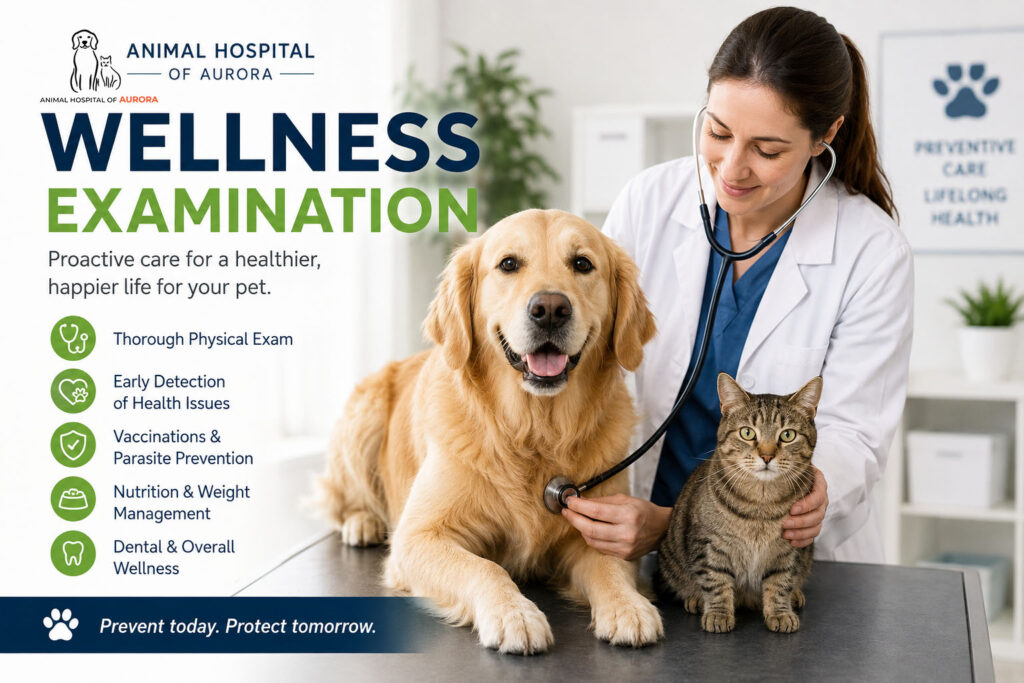
Step into the world of proactive pet care with our comprehensive wellness examination, a vital cornerstone of your pet’s preventive treatment at Animal Hospital of Aurora.
Regular wellness examinations help us monitor your pet’s overall health, identify potential problems early, and provide personalized recommendations based on their age, breed, lifestyle and medical history. Whether you have a playful new puppy or kitten, a healthy adult pet, or a senior companion, routine veterinary checkups can help support a longer, healthier and more comfortable life.
What Is a Pet Wellness Examination?
A wellness examination is a complete veterinary assessment performed even when your pet appears healthy. Pets cannot always tell us when something feels wrong, and some medical conditions may develop without obvious symptoms.
During your pet’s examination, our veterinary team carefully evaluates their overall physical condition and looks for subtle changes that could indicate an emerging health concern.
Preventive veterinary care allows potential problems to be addressed before they become more complicated.
What We Check During a Wellness Exam
Every pet is different, so the examination and recommendations may vary according to your pet’s individual needs. A typical wellness examination may include:
- Overall body condition and weight assessment
- Eyes, ears, nose and mouth examination
- Teeth and gum evaluation
- Heart and lung assessment
- Skin and coat examination
- Joint and mobility evaluation
- Abdominal examination
- Temperature and other vital signs when appropriate
- Nutrition and feeding recommendations
- Parasite prevention review
- Vaccination assessment
- Behaviour and lifestyle discussion
Our veterinarian may also recommend diagnostic testing when appropriate, particularly for senior pets or animals with changes in appetite, weight, behaviour, activity or general health.
Why Regular Wellness Examinations Matter
Routine veterinary examinations provide an opportunity to establish a health baseline for your pet and monitor changes over time.
Regular veterinary examinations are an important part of preventive healthcare and can help identify potential health concerns early.
Regular checkups may help identify early signs of conditions affecting the:
- Heart
- Kidneys
- Liver
- Teeth and gums
- Skin
- Eyes and ears
- Digestive system
- Muscles and joints
Early detection can often provide more treatment options and may help prevent minor health concerns from becoming more serious.
Wellness Exams for Puppies and Kittens
Puppies and kittens experience rapid physical development during their first year of life. Regular veterinary visits are particularly important during this stage.
Your veterinarian can help guide you through important areas of early pet care, including:
- Vaccination schedules
- Deworming and parasite prevention
- Nutrition and healthy growth
- Dental development
- Behaviour and socialization
- Spaying or neutering discussions
- Microchipping
- Ongoing preventive care
Starting preventive veterinary care early can help establish healthy habits that benefit your pet throughout their life.
Adult Dog and Cat Wellness Care
Healthy adult pets should still receive routine veterinary examinations.
Even if your dog or cat seems perfectly healthy, changes in weight, dental health, heart function, skin condition or other areas may develop gradually.
During an adult wellness visit, we can review your pet’s lifestyle, diet, vaccination status, parasite protection and any changes you have noticed at home.
These regular examinations allow us to monitor your pet’s health from one visit to the next.
Senior Pet Wellness Examinations
As pets grow older, their healthcare needs often change.
Senior dogs and cats may benefit from more frequent examinations and additional diagnostic testing. Conditions affecting the kidneys, liver, heart, joints and other organs can become more common as pets age.
A senior wellness assessment may include recommendations for:
- Blood testing
- Urinalysis
- Weight monitoring
- Joint and mobility evaluation
- Dental assessment
- Nutrition changes
- Pain management
- Additional diagnostic testing when indicated
Regular monitoring helps us develop a care plan suited to your senior pet’s changing needs.
Vaccinations and Preventive Care
Vaccinations are an important part of preventive healthcare for many dogs and cats.
During your pet’s wellness examination, our veterinarian will review their vaccination history and lifestyle before recommending an appropriate vaccination schedule.
Vaccination needs can vary depending on factors such as your pet’s age, health, travel, boarding, outdoor exposure and contact with other animals.
Parasite Prevention
Parasites such as fleas, ticks, intestinal parasites and heartworm can affect pets in Ontario.
Your wellness appointment is an excellent opportunity to discuss appropriate parasite prevention based on your pet’s lifestyle and risk factors.
Preventive strategies may help protect both your pet and, in some cases, members of your household.
Dental Health Is Part of Overall Wellness
Your pet’s mouth can provide important information about their overall health.
During a wellness examination, we assess the teeth and gums for signs of plaque, tartar, inflammation, damaged teeth or other dental concerns.
Untreated dental disease can cause discomfort and may affect your pet’s quality of life. If we identify a concern, we can discuss whether professional dental care or additional evaluation is recommended.
Nutrition and Healthy Weight Management
Maintaining a healthy weight is an important part of your pet’s long-term wellness.
Being significantly overweight or underweight may increase the risk of certain health problems. During your pet’s examination, we can evaluate their body condition and discuss feeding amounts, diet choices, treats and activity levels.
Nutrition recommendations are personalized according to your pet’s age, size, lifestyle and health requirements.
How Often Should My Pet Have a Wellness Examination?
The appropriate examination schedule depends on your pet’s individual health needs.
Many healthy adult dogs and cats benefit from an examination at least once a year. Puppies, kittens, senior pets and animals with ongoing medical conditions may require more frequent veterinary visits.
Your veterinarian can recommend the most appropriate schedule for your pet.
Signs Your Pet May Need a Veterinary Examination
You should contact a veterinarian if you notice unusual changes in your pet, including:
- Reduced appetite
- Increased or decreased drinking
- Unexpected weight loss or gain
- Vomiting or diarrhea
- Coughing or breathing changes
- Changes in urination
- Difficulty walking or jumping
- Persistent scratching
- Bad breath or difficulty eating
- Lumps or swelling
- Changes in behaviour or energy level
Do not wait for your pet’s next scheduled wellness examination if you are concerned about their health.
Preventive Pet Care at Animal Hospital of Aurora
At Animal Hospital of Aurora, our goal is to help pets stay healthy through every stage of life.
Our wellness examinations focus on prevention, early detection and individualized veterinary care. By understanding your pet’s medical history, lifestyle and unique needs, we can work with you to develop an appropriate preventive healthcare plan.
From your puppy or kitten’s first veterinary visits through adulthood and the senior years, regular wellness examinations provide an important foundation for lifelong health.
Book Your Pet’s Wellness Examination in Aurora
Give your pet the benefit of proactive preventive veterinary care.
Schedule a wellness examination at Animal Hospital of Aurora and let our veterinary team help you monitor your dog or cat’s health, address concerns early and create a preventive care plan tailored to their individual needs.
Animal Hospital of Aurora – Caring for the health and well-being of pets in Aurora, Ontario.
Frequently Asked Questions
What happens during a pet wellness examination?
Your veterinarian performs a physical examination, reviews your pet’s health history and discusses areas such as nutrition, vaccination, parasite prevention, dental health, weight, behaviour and lifestyle.
Does my pet need a wellness exam if they seem healthy?
Yes. Routine examinations are designed to identify potential health concerns before obvious symptoms develop and to monitor changes in your pet’s health over time.
How often should my dog or cat see a veterinarian?
Many healthy adult pets should be examined at least annually. Puppies, kittens, senior pets and pets with medical conditions may need more frequent visits.
Should senior pets have more frequent wellness exams?
Often, yes. Senior pets may develop health changes more quickly and may benefit from additional monitoring and diagnostic testing.
Can vaccinations be given during a wellness examination?
Yes, when appropriate. Your veterinarian will review your pet’s vaccination history, health and lifestyle before recommending necessary vaccines.