

Treatment of Gum Disease in Pets: Restoring Healthy Gums and Better Oral Health
Gum disease is one of the most common health issues affecting dogs and cats. Many pet owners are surprised to learn that oral health problems can impact much more than just their pet’s mouth. Left untreated, gum disease can lead to pain, tooth loss, difficulty eating, and even affect vital organs such as the heart, liver, and kidneys.
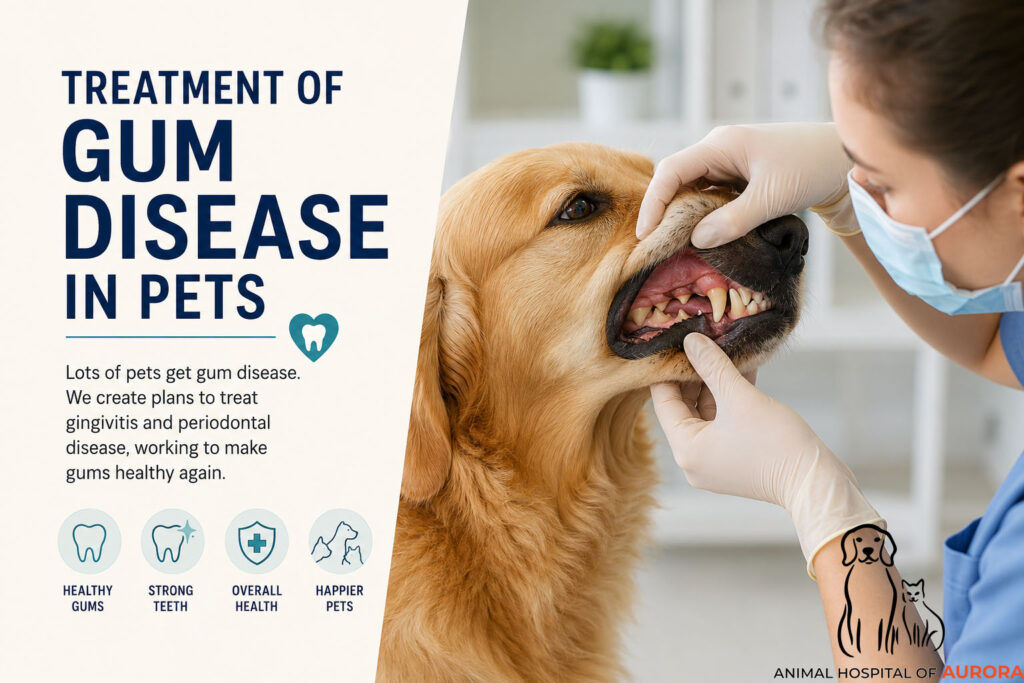
At Aurora Pet Vet, we create personalized treatment plans for pets suffering from gingivitis and periodontal disease, helping restore healthy gums and improve overall well-being.
What Is Gum Disease?
Gum disease develops when plaque and bacteria build up along the gumline. Over time, this buildup causes inflammation and infection of the gums.
The condition typically progresses through two stages:
Gingivitis
Gingivitis is the earliest stage of gum disease. It causes redness, swelling, and irritation of the gums. Fortunately, gingivitis is often reversible with professional dental care and improved oral hygiene.
Periodontal Disease
If gingivitis is left untreated, it can progress to periodontal disease. This more advanced condition affects the tissues and bone supporting the teeth, potentially leading to tooth loss and chronic pain.
Signs Your Pet May Have Gum Disease
Many pets hide discomfort, making dental disease difficult to detect in its early stages. Watch for signs such as:
- Persistent bad breath
- Red, swollen, or bleeding gums
- Yellow or brown tartar buildup
- Difficulty chewing food
- Dropping food while eating
- Excessive drooling
- Pawing at the mouth
- Loose or missing teeth
- Reduced appetite
- Changes in behaviour or irritability
If you notice any of these symptoms, a veterinary dental examination is recommended.
Why Gum Disease Should Never Be Ignored
Oral infections can have serious consequences beyond the mouth. Bacteria associated with advanced periodontal disease may enter the bloodstream and contribute to health issues involving:
- Heart disease
- Kidney disease
- Liver disease
- Chronic inflammation
- Reduced quality of life
Early diagnosis and treatment can help prevent these complications and keep your pet healthier for longer.
How We Treat Gum Disease
At Aurora Pet Vet, we tailor treatment plans to each pet’s individual needs and the severity of their dental condition.
Comprehensive Oral Examination
We begin with a thorough dental assessment to evaluate gum health, tooth stability, and signs of infection or inflammation.
Professional Dental Cleaning
A professional dental cleaning removes plaque and tartar from above and below the gumline. This helps eliminate harmful bacteria and reduces inflammation.
Treatment for Gingivitis
For pets with early-stage gum disease, professional cleaning combined with at-home dental care can often restore healthy gums and prevent progression.
Treatment for Periodontal Disease
Advanced cases may require deeper cleaning procedures, periodontal therapy, or tooth extractions when a tooth cannot be saved. Our goal is always to relieve pain and preserve oral health whenever possible.
Ongoing Home Care Recommendations
We provide guidance on maintaining your pet’s oral health through:
- Daily tooth brushing
- Veterinary-approved dental diets
- Dental chews
- Oral rinses and dental products
- Routine dental checkups
Preventing Gum Disease
Prevention is the best approach to protecting your pet’s oral health. Regular veterinary dental examinations combined with proper home care can significantly reduce the risk of gum disease. The Canadian Veterinary Medical Association (CVMA) emphasizes the importance of routine dental care to help prevent periodontal disease and support your pet’s overall health.
Helpful preventive measures include:
- Brushing your pet’s teeth regularly
- Scheduling annual dental evaluations
- Providing dental-friendly treats and diets
- Monitoring for signs of bad breath or gum inflammation
- Following your veterinarian’s dental care recommendations
Give Your Pet a Healthier Smile
Healthy gums play a vital role in your pet’s comfort, nutrition, and overall health. Whether your pet is showing early signs of gingivitis or requires treatment for advanced periodontal disease, professional veterinary care can make a significant difference.
At Aurora Pet Vet, we are committed to helping dogs and cats maintain healthy mouths and happier lives through comprehensive dental care and personalized treatment plans.
Schedule a dental examination today and help your pet enjoy a healthier smile for years to come.